A not too brief bio, or what may be my most important presentation yet
I feel it’s time to look back on my life, its ups and downs, its failures and successes. I need to think through and analyze why I chose this unending struggle to constantly achieve, often at the cost of depriving myself of the simple pleasures of a comfortable and happy life, especially after a difficult childhood.
Although I am not a follower of biographical criticism, at this point in my life, as I reflect on the work I produced and the community activism I was engaged in, I cannot ignore the profound impact certain events in my family history had on the inner workings, messages, and themes of my literature, as well as the makeup of my activism. Years ago, I attempted a self-psycho-analysis which I later included it in my book, The Armenian Genocide in Literature, Perceptions of Those Who Lived Through The Years of Calamity (2012, 2014), as “A Personal Note in Lieu of Preface, Why I undertook the study of Genocide literature, and how my life has changed because of it.” The PDF version of the second edition this book is included in the catalogue on this website.
I was only seven years old when my father was kidnapped by the Soviet secret police in occupied Azerbaijan, the northwestern province of Iran, in January 1944. My world turned upside down. I was deprived of my father for nearly eleven years. I felt destitute, but somehow, I was driven by an inexplicable zeal to beat the odds and push forward in my life.
I have told my father’s story and shared this part of my life in My Father, A Man of Courage and Perseverance, a Victim of Stalin’s GULAG (2017). The PDF version of this book is also included in the catalogue on this website.
My father’s return from Siberia was a miracle and a turning point in my life.
I had promised my ailing mother that I would find a job and ease her burden as soon as I graduated from high school. With my father’s return, I was finally able to pursue my dream of higher education. I passed the University of Tehran’s highly competitive entrance exam and, in 1960, earned a Bachelor of Science degree in civil engineering. As the only female student in a cohort of one hundred, I faced many challenges, including a remark from the dean of our faculty, who doubted my ability to succeed in what was then an all-male field. But life’s challenges have always made me stronger and more determined. I was employed by Lausanne Construction right after graduation and my first assignment was field engineer for the construction of the National Bank in Tehran. My first challenge was climbing up and down wooden ladders—staircases were not built yet—to supervise the construction. I dealt with that obstacle by wearing capri pants under my skirt. Wearing trousers was not yet acceptable for women in Tehran in the 1960s. Meanwhile, I continued my involvement within the Armenian community, especially in Ararat Cultural Society and served as a member of the Executive Committee as well as the chair of the Literary Group.
I worked hard both on the construction sites and in the office and earned a good salary, allowing me to save money and realize my dream of joining by future husband, Neshan Peroomian, a civil engineering student at UC Berkeley. We were married on June 16, 1963, a week after I arrived in the U.S. Of course I began looking for employment in my field, and every rejection letter was a dagger piercing my heart; I had to work as I needed the income to support my husband. I finally found a job in a San Francisco construction firm and commuted from Albany (the UC Berkeley student housing compound) changing 2-3 buses every day. The Bay Area Rapid Transit (BART) had not been constructed yet. We had an interesting club of working women in our community of married students, and we congratulated each other upon our husbands’ graduation for receiving a PHT (versus PHD) a pun for “Putting your Husband Through.”
We returned to Iran, as we had promised our parents, at the end of 1965 with our newborn son, Vahé. With our families taking care of Vahé, I resumed working at Lausanne and Neshan worked in various construction firms across Iran. In 1972, we pooled our resources and founded our own construction company, where we worked together until 1978. We also continued our community activities. I assumed new responsibilities in Ararat organization. Neshan was elected president of the Executive Committee and the liaison in the committee in charge of the construction of the legendary Marzavan sports and cultural complex. I was also a member of the Board of the Regents of the 38 operating Armenian schools in Tehran and in charge of extracurricular activities in these schools.
The Islamic Revolution in Iran upended everything. In December 1978, we moved to the United States and, together, faced the many difficulties and challenges of starting over in a new country with our two young sons. Within a year, we had established another construction company, again working side by side.
But my restless soul led me to change course and follow my passion: the study of Armenian literature. I met with Professor Avedis Sanjian, chair of Armenian Studies in the UCLA Near Eastern Languages and Cultures Department. After reviewing my credentials, he said coldly, “You have no undergraduate courses in the humanities. How are you going to manage graduate courses in Armenian Studies? I think you’d better go back and continue working in your field of civil engineering.”
His refusal didn’t stop me. I sought the support of Professor Richard Hovannisian, chair of Modern Armenian History in UCLA’s History Department. He intervened, and it worked. I began graduate school in January 1980, determined to prove myself. In 1989, I became the first Ph.D. in the Armenian section of the department, twenty years after its establishment. With the unwavering support of Professor Hovannisian, my dissertation, Literary Responses to Catastrophe: A Comparison of the Armenian and Jewish Experience, was published by the UCLA Von Grunebaum Center in 1993.
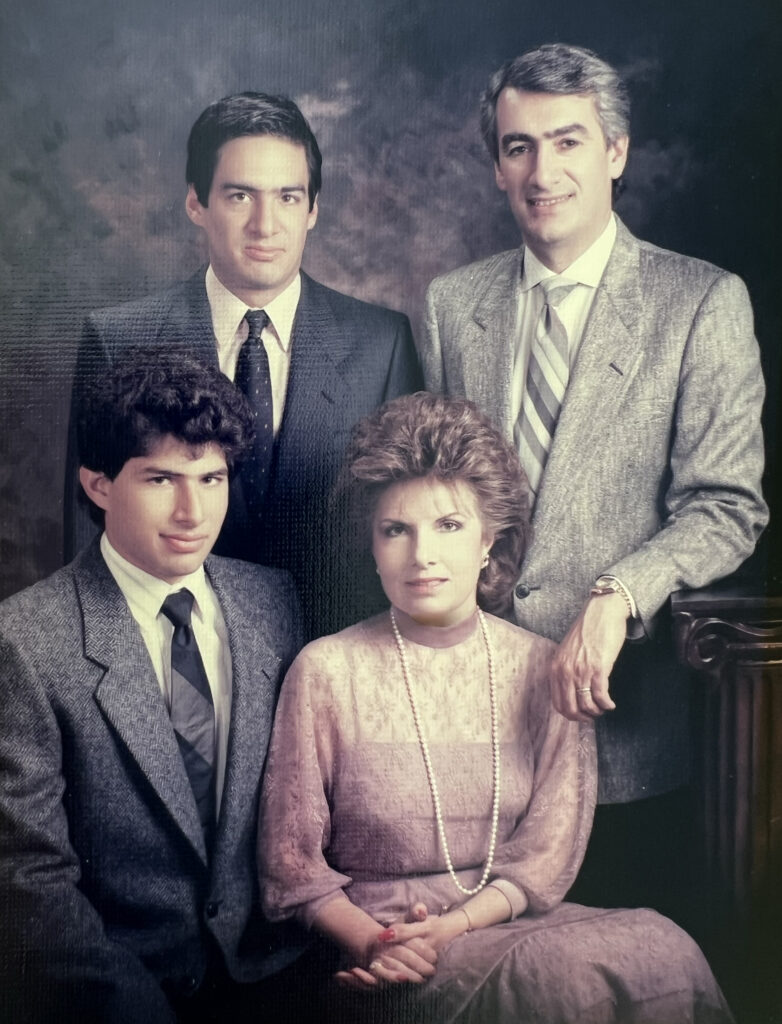
When I submitted my dissertation, A comparative study of Armenian and Jewish responses to genocide, I knew it was only the beginning. I felt compelled to delve deeper into the Genocide’s impact on survivors: how they processed their trauma, how they survived, and whether or how they transmitted their experiences to the next generation. I disciplined myself to effectively balance academic life, community service, and family—teaching, researching, publishing, presenting at scholarly conferences, taking on community leadership roles, being a supportive wife to my compassionate and forgiving husband, and guiding our sons, Vahé and Oshin, in the unfamiliar environment of Los Angeles. They grew up to become two exceptional human beings, good Armenians, and most importantly my deepest source of pride and my greatest achievement.
In 1996, I unsuccessfully applied to replace Professor Avedis Sanjian after his retirement. I was a modernist, with a focus on Armenian Genocide literature, applying to an institution that prioritized ancient and medieval studies, where Turkish influence was significant, and where I lacked the support of the incumbent. I lost the opportunity to hold a university position at a time when academic prospects in the field were scarce. This loss denied me the regular engagement with young minds, academic networking, and the stability of a permanent academic post—opportunities I had long hoped for.
To be honest, I have felt the impact of that setback throughout my later academic life. But I did not quit. With the unpaid title of associate researcher at UCLA, I continued to access the university’s rich collection of Armenian studies resources. I pursued my mission through writing and research, aiming to uncover universal truths about the Armenian Genocide through artistic responses to catastrophe.
Impelled by the absence of attempts to formally educate the young generation of Armenians about the Armenian Cause (Hay Tahd) and the transmission of historical memory, I initiated a project to produce high school-level Hay Tahd textbooks while serving on the board of the Armenian National Committee of Western Region. A committee was established, but eventually I took it upon myself to author the textbooks in Western Armenian, for grades 10, 11, and 12. They were published under the auspices of the Western Prelacy of the Armenian Apostolic Church between 1990 and 2002. The Ministry of Education of the Republic of Armenia sponsored the project, and a one volume history of the Armenian Question was published in Armenia in 2002. Years later, while I was serving on the Board of Regents of the Prelacy Armenian Schools, I launched the development of a Guide on teaching the Armenian Genocide to Armenian children of all ages. The Ministry of Education of the Republic of Armenia sponsored this project as well. The online version was developed and launched in 2011 and the guidebook was published in 2016.
Throughout my career, I was supported and recognized by the Armenian community and media. I chose a heavy, painful, and demanding topic for my research and writing. Though I tried to maintain scholarly detachment, reading accounts of perpetrators’ cruelty and victims’ suffering shattered my emotional resilience and affected my disposition. My husband, even though he sometimes joked about it, shared this burden in every way he could.
From the very beginning, my husband has been, and continues to be, my rock and my greatest supporter. His encouragement helped me overcome criticism and self-doubt. He is the reason I am published today and can take pride in the work I’ve done including 139 presentations, lectures, and speeches, 50 teacher training workshops and seminars, 165 presentations at international conferences, 112 publications including monographs, textbooks, research articles, book chapters, not counting more than 110 newspaper articles.
I have combed through hundreds of essays and presentations to include in this website and conclude this presentation, maybe my most important presentation yet: The Life’s Work of Dr. Rubina Minassian Peroomian